




KARAWANG | ONEDIGINEWS.COM | Karawang Correctional Institution (Lapas Karawang) is utilizing vacant land within its compound to develop a food security program. The land is being used for various activities, including agriculture, livestock farming, and fishery, with inmates directly involved in the activities.
Head of Lapas Karawang, Ma’ruf Prasetyo, said that of the approximately three hectares of available land, 1.7 hectares have been allocated for agricultural purposes.
The utilization of the land is considered appropriate given the characteristics of Karawang Regency, which has long been known as one of Indonesia’s major rice-producing areas.
“Lapas Karawang has approximately three hectares of idle land, and 1.7 hectares of it are being used for agriculture because Karawang is well known for its rice production,” Ma’ruf said.
The remaining land has been divided into several plots for various food security activities. The development of the program is also part of Lapas Karawang’s support for the President’s Asta Cita program and initiatives of the Ministry of Immigration and Corrections.
For Lapas Karawang, the program is not solely aimed at producing food. It is also part of the rehabilitation process for inmates. They are directly involved in the activities so they can acquire practical skills that may serve as valuable provisions when they return to society.
One of the activities developed is the Kampung Unggul Balitbang (KUB) chicken farming program. This breed was selected because it has higher egg productivity and faster growth compared to conventional free-range chickens.
Inmates are also trained in the process of hatching KUB chicken eggs. Once hatched, the chicks can either be marketed or raised as broiler chickens.
The chickens are fed twice a day, in the morning and afternoon.
In addition to chicken farming, Lapas Karawang has also developed a meat sheep farming program. Several breeds being raised include Dorper, Texel, Merino, and Suffolk.
According to Ma’ruf, these meat sheep breeds are still relatively unfamiliar to many people in Indonesia, despite their advantages in terms of meat production.
“These meat sheep are breeds that produce significantly more meat in terms of carcass yield compared with Garut sheep,” he said.
Lapas Karawang has also developed a cattle-fattening program. The decision to raise cattle takes into account Karawang’s agricultural potential, particularly its extensive rice fields.
Rice straw generated from agricultural activities can be utilized as one of the feed sources for cattle. In this way, the agricultural and livestock sectors can support one another.
“Karawang has many rice-producing areas. Rice straw can be used as one of the feed sources for cattle,” Ma’ruf said.
The fisheries sector is also part of the food security program. Currently, five types of fish are being raised within the Lapas Karawang compound: catfish, tilapia, carp, pangasius, and koi.
All of these activities directly involve inmates. They participate in farming, livestock management, and fish maintenance.
“Inmates are directly involved in all livestock farming and agricultural activities,” he explained.
Visited by UNIKOM Bandung Interns
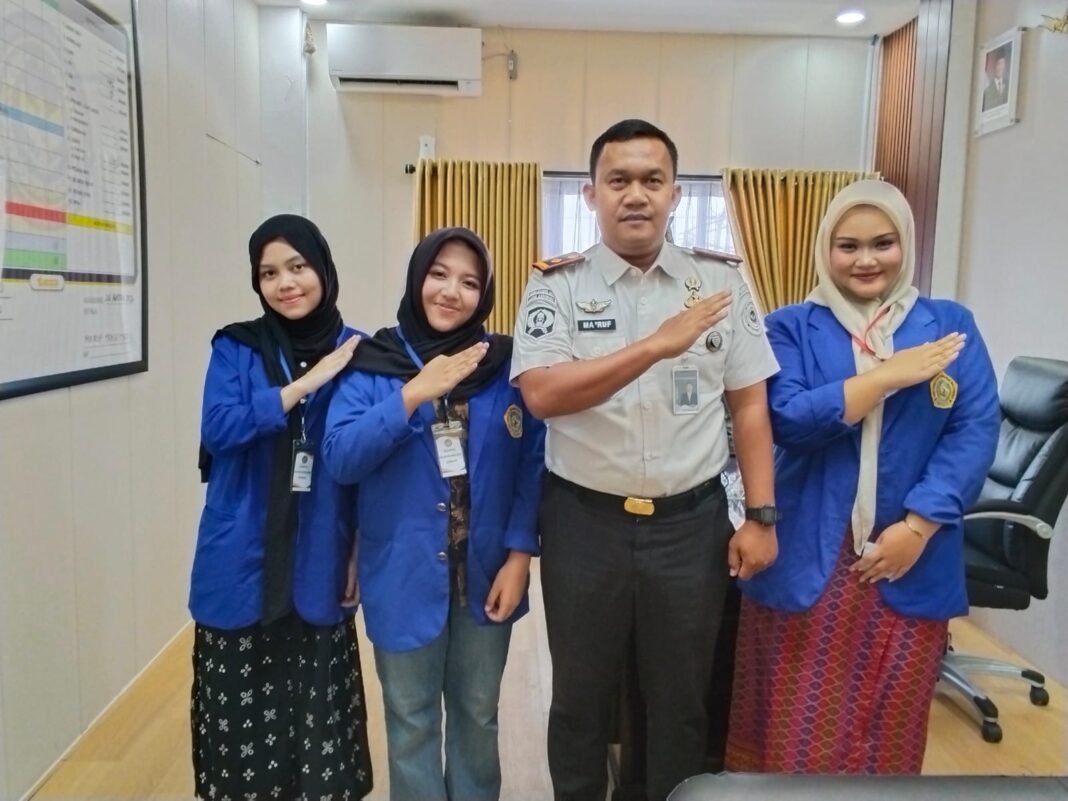
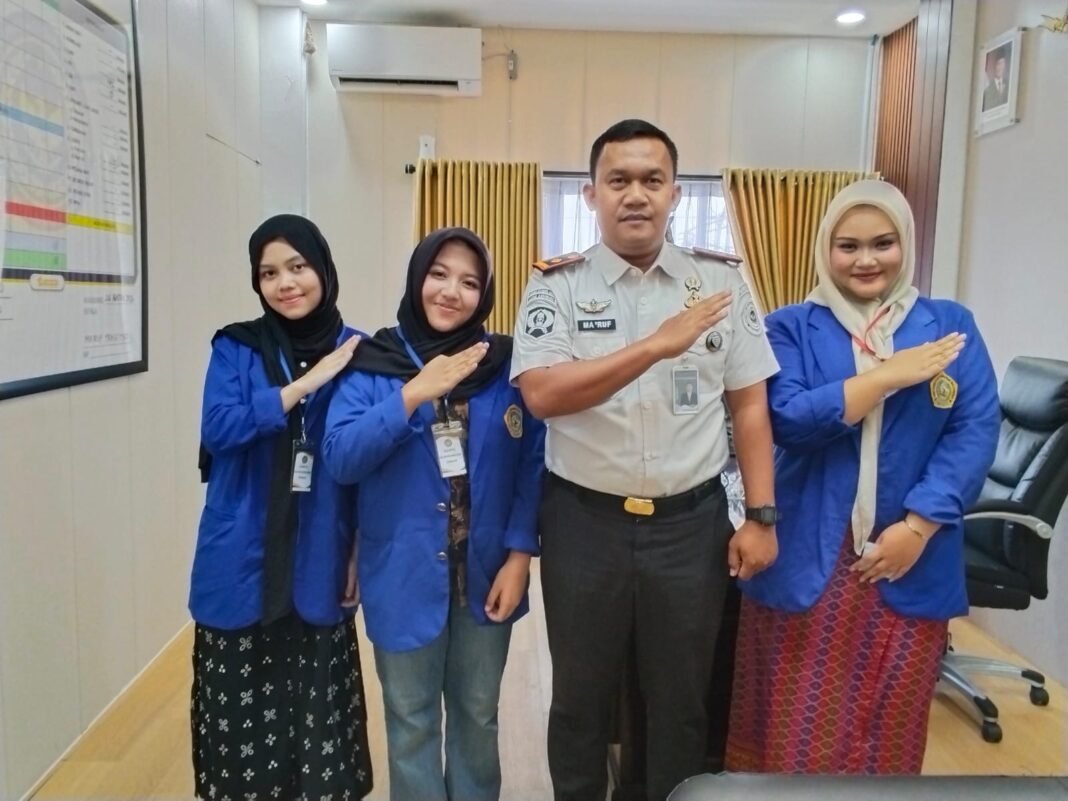
The food security program at Lapas Karawang also attracted the attention of students from Universitas Komputer Indonesia (UNIKOM) Bandung who are undertaking their internship at TerasPasundan Mediatama.
During their visit to Lapas Karawang, interns Annisa, Khayla, and Syakra had the opportunity to observe various activities within the correctional facility, particularly in an area known as Laskar Farm.
Laskar Farm provides a direct illustration of how the food security program is being implemented within the correctional institution. In the area, the interns observed various animals being raised, including chickens, cattle, sheep, and fish.
For Annisa, Khayla, and Syakra, the visit provided both new experiences and valuable knowledge. They not only observed the results of the food security program but also gained insight into livestock management and the utilization of land within the correctional facility.
According to the interns, the existence of Laskar Farm demonstrates that a correctional institution is not merely a place where inmates serve their sentences, but can also serve as a space for learning and skills development.
The three interns said they gained significant educational value from observing firsthand the agricultural and livestock activities involving inmates.
“Lapas Karawang provided us with a lot of education about Laskar Farm, where we were introduced to various kinds of animals, such as chickens, cattle, sheep, and fish,” Annisa said.
The visit also left a strong impression on the interns as they were able to see firsthand how inmates are given opportunities to learn and work through various productive activities.
For them, Laskar Farm demonstrates that inmate rehabilitation can be developed through activities closely connected to community needs, particularly in agriculture, livestock farming, and fisheries.
The program also demonstrates that the rehabilitation process does not only take place through activities conducted indoors, but also through hands-on practices that can help develop inmates’ skills and independence.
Ma’ruf said the food security program is one way to provide broader opportunities for inmate rehabilitation.
Within the correctional facility, inmates are not only serving their sentences but are also learning various skills that can be utilized when they eventually return to society.
He added that developing food security is also important in promoting food self-sufficiency. Therefore, Lapas Karawang is seeking to contribute by maximizing the available land within the correctional facility.
“If food security is strengthened, there will be more opportunities and platforms through which we can provide guidance and skills development for inmates,” Ma’ruf concluded.